
Use case
Answer operational questions from enterprise data.
Employees ask questions in plain language. Agents answer from approved data, using business definitions your data team owns, and every query is tied to the person who asked.
- 14:05:00grantdataset network_ops, definitions v12ALLOWED
- 14:05:02ask"Which regions dropped the most sessions last week?"ALLOWED
- 14:05:04querynetwork_ops.sessionsALLOWED
- 14:05:06queryfinance.payrollBLOCKED
- 14:05:07writenetwork_ops.sessionsBLOCKED
- 14:05:09deliveranswer with query and grantDONE
Example Envelope
Agent Envelope · Authority for a defined task
- Allowed
- Query approved data using the business definitions your data team maintains.
- Blocked
- Write to the warehouse or reach data outside the approved set.
- Delegated
- Helper agents get the same or narrower limits.
- Approval required
- Adding a new data source or widening access.
Illustrative workflow. We confirm systems, limits and approvals with your team during scoping.
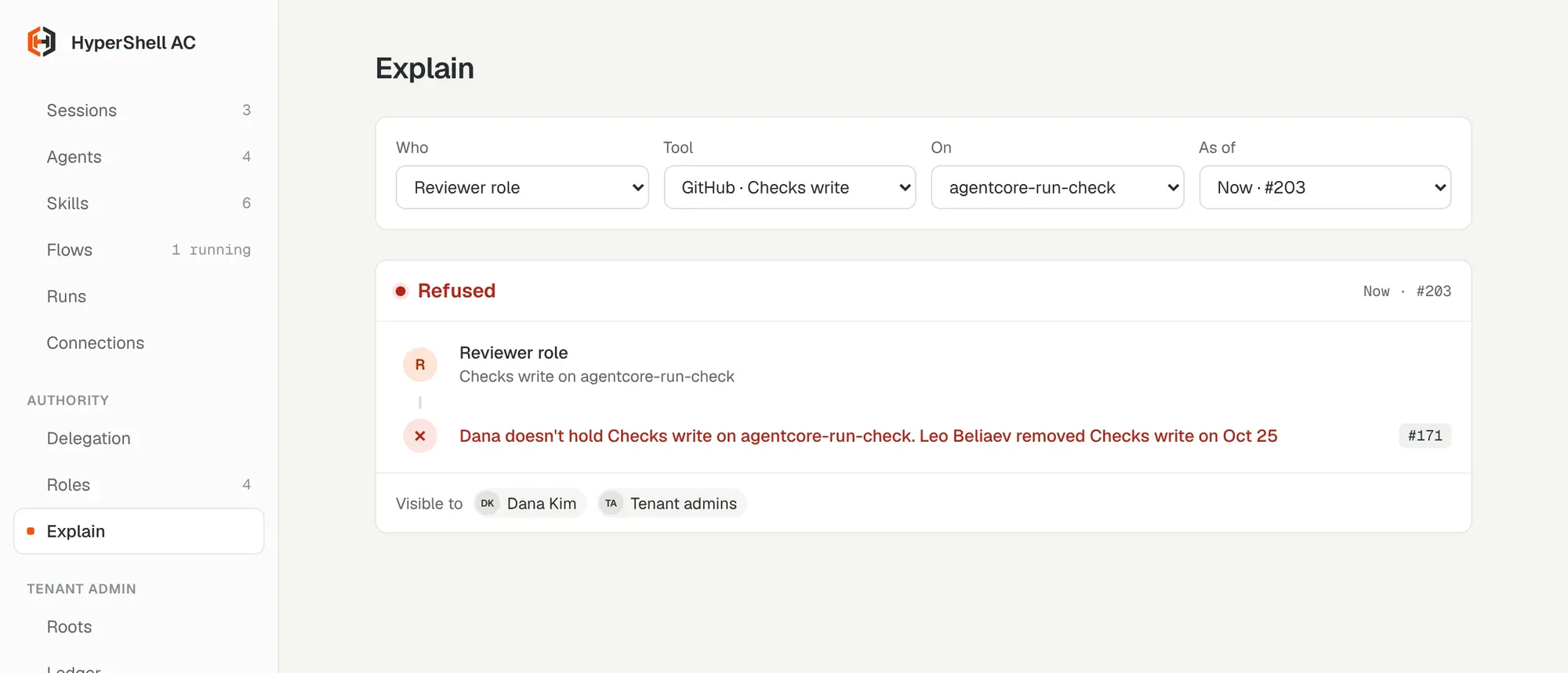
How the Envelope works
01
Define the authority
The data team grants approved data, business definitions, models and a spending limit.
02
Enforce the limits
Queries stay inside the approved data. Writes are blocked.
03
Show what happened
Answers come with the query and the grant behind them, so the data team can review what was asked and returned.
Measure of value
Time to an answer.
Agreed with your team at scoping, and verified against your own telemetry.
Customer story

Governed analytics at Helium Mobile
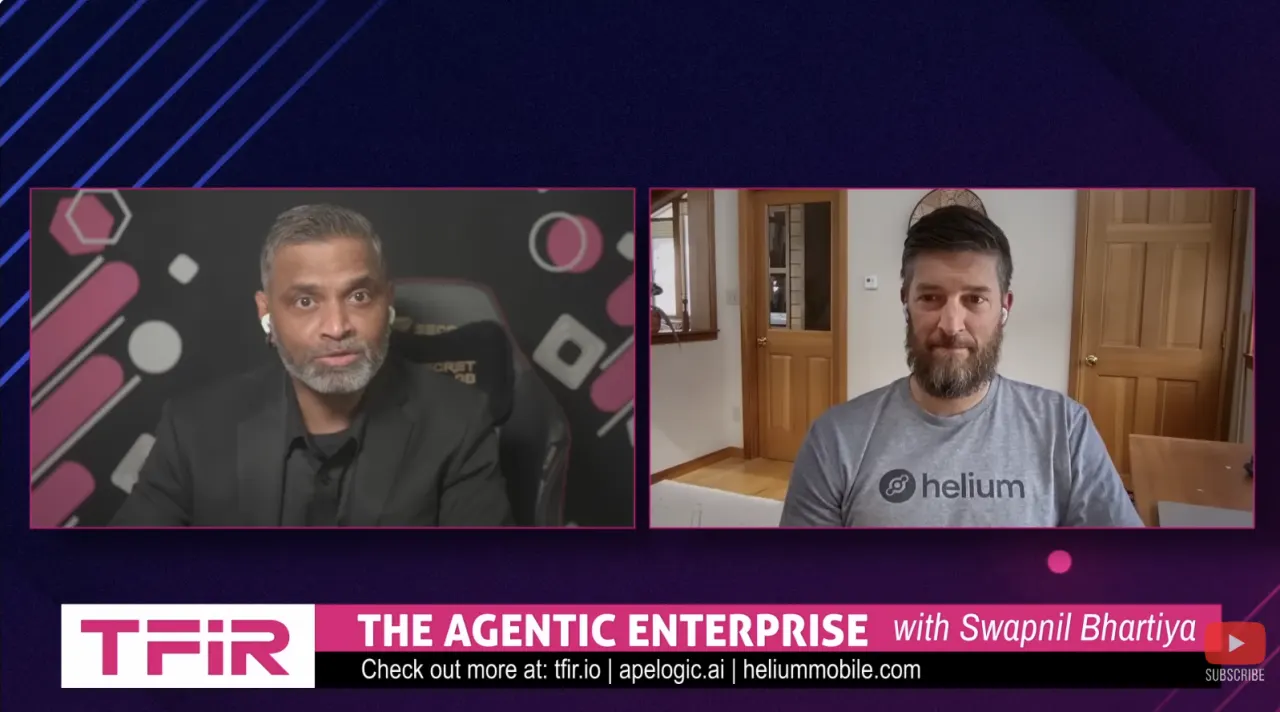
Helium Mobile had a lean data team and a queue in front of it: every business question became a dashboard ticket, and delivery waited on people rather than on code. HyperShell deployed agents into their own environment, connected directly to their Trino data warehouse, and encoded the business definitions as a semantic context layer the data team owns. The first phase shipped in under two months, with no change of platform.
"HyperShell gave our agents safe, governed access to the data warehouse. Employees stopped waiting days for answers."
- ~60%
- drop in dashboard data-ops workload
- < 2 months
- from kickoff to handoff to the Helium Mobile team
- Team-owned context
- semantic context layer, governed by the data team
Results from a data access and analytics engagement at Helium Mobile. They are not engineering or IT operations results.
Before
Dashboard-request bottleneck
- Days-long backlog of dashboard requests
- Data ops translates every business question into SQL
- Superset charts built one ticket at a time
After
AI-powered data self-service
- Employees ask Claude questions in plain English
- Claude generates SQL on Trino with approved business context
- Useful queries become repeatable Superset charts
- Data team owns the semantic context layer
How we start
01
No costScope
Workflow scoping session
Pick one workflow. Agree on its access and spending limits and a measurable success criterion.
02
Scoped separatelyDeploy and build
Implementation engagement
HyperShell engineers deploy the platform in your environment, connect approved systems and build the first workflow with your team.
Run and expand
Annual subscription
Governance platform, supported runtime management and ongoing support. Add workflows, users and agents as you grow.
Other use cases
Scope this workflow with your team.
Bring a workflow owner and a security or platform lead. Leave with a proposed workflow scope, access and spending limits, and a measurable success criterion.